This blog has been written by The Flood Hub People.
How much do you really know about flooding? This blog busts some of the common misconceptions surrounding flooding and flood risk to help you protect yourself and property from future flood risk.
Misconceptions like “flooding only happens near rivers or the sea”, “I don’t live on a floodplain, so I won’t flood” and “I live on a hill, so I won’t flood”, are commonly heard, and it’s understandable why! But a staggering 6.3 million properties in England are at risk of flooding. There are many different types of flooding, many of which can occur far away from a river’s floodplain. Intense rainfall, blocked sewers, overwhelmed drainage systems, groundwater, burst pipes and surface water runoff can all cause a flood far away from a river or the sea.
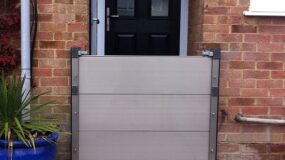
As climate change becomes an increasing risk, planning and preparing for a flood has never been more important. Unfortunately, only 29% of UK residents know what steps to take to make their homes flood resilient. Actions like writing a flood plan and having a flood kit ready might take a day to complete but would prove invaluable, should a flood alert or warning be issued. As for making physical changes to your property, many people believe Property Flood Resilience (PFR) is expensive, but there are many affordable and low-cost options which can be used to protect your property. Furthermore, whatever you spend on PFR products has been reported to return a cost-benefit ratio of £1: £5.
For some people, the threat of flooding gets pushed to the back of the mind, especially when we hear extreme weather events described as a ‘1 in 100-year event’. It’s a misconception to think “a 1-in-100-year flood means I should be ok for 99 years now”. This is just a way of describing the severity and impacts of a storm, rather than its return period. A 1 in 100-year event is equivalent to 1/100, which as a percentage is 1%. Understanding flood risk as a percentage allows it to be displayed in a more quantifiable way, meaning there is a 1% chance of a flood of that magnitude occurring in a year.
The time of year can also fuel a false sense of security. Some believe that “flooding only happens in winter” and it’s easy to see why people believe this. Typically, heavy rain and extreme weather are more closely associated with the winter months, and we like to think summer brings warm and dry weather, but Storm Antoni, Betty, Lilian and Floris all impacted the UK in August. Further to this, did you know Aviva found 35% of home insurance flood claims occur between June and August? Warmer temperatures through summer allow the atmosphere to hold more moisture, which lands on dry, baked ground in summer can cause flash flooding.
“It’s only a few inches of water, what harm can it do!” Well, only 6” / 15cm of water can knock you off your feet, and only 11” / 30cm of water is enough to float a car. Only one eggcup worth of water in a vehicle’s engine is enough to wreck it, and just think what damage would be caused to your property if you found a few inches of water inside.
Some people believe “flooding is inevitable, you can’t hold the water back” which is true to an extent: water is very powerful and will seep its way through any gap or crevice. But we all have a role in managing flood risk. There are many simple tasks and methods which we can implement to help manage our local flood risk. Actions like installing water butts, using permeable paving on driveways, clearing fallen leaves away from highway gullies and ensuring no fats, oils or greases enter our drains, all help to manage flood risk within our communities. Download our resource here.
The community flood action groups The Flood Hub People have worked with have managed to achieve some incredible outcomes, which can be seen here on our case studies page here. The work and responses that these flood groups have received combats the myths like “it’s not my problem”, “raising awareness doesn’t help” and “the council should sort it” which are all commonly heard. In the UK, there is no one body responsible for managing flood risk, it requires a collaborative approach. Everyone has a role in helping to address flood risk, including communities who can build communication trees and share information to increase preparedness.