This blog has been written by The Flood Hub People.
Paving over driveways can be practical and visually appealing, but it can also reduce your property’s ability to manage surface water and increase the risk of flooding. This blog covers the options available, planning requirements and things to consider when installing a driveway, rain garden or soakaway.
We spoke to a couple who had recently experienced flooding, their conversation highlighted a common dilemma many homeowners face. One partner wanted to install a tarmac driveway for convenience and aesthetics, while the other understood that covering a lawn or garden with an impermeable surface can reduce natural drainage and increase surface water runoff.
When rainwater cannot soak into the ground, it flows across paved areas and can overwhelm local drains and sewers. This contributes to surface water flooding, which is one of the most common causes of property flooding in the UK. By managing water responsibly within a property boundary, homeowners can reduce the risk of local flooding, prevent damage to gardens and roads and help maintain a more sustainable water cycle in urban areas.
Before installing a driveway, it’s important to know the planning rules for front gardens:
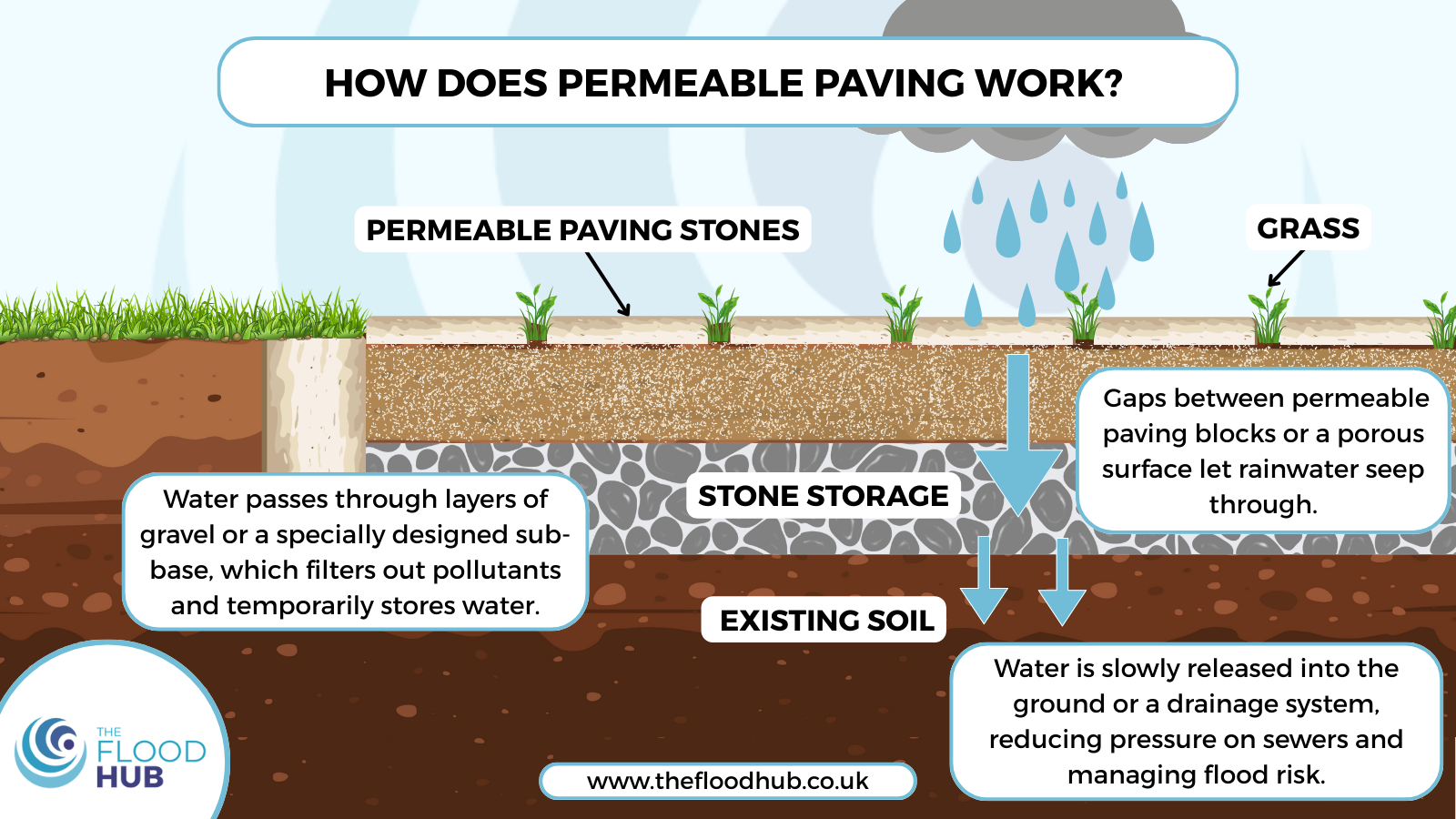
Permeable paving allows surface water to penetrate through the surface and either be stored temporarily or infiltrate into the ground, helping to reduce surface water runoff and the risk of local flooding. There are several options to consider:
Resin Driveways
Resin driveways are popular for their hardwearing, low maintenance and attractive finish. They can also offer a fully permeable solution if installed correctly. There are two main types:
Grass or Gravel Pavers
These grid-based systems are filled with grass or gravel, offering a load-bearing surface for vehicles while allowing water to drain naturally. They are ideal for driveways, overflow parking and garden paths, blending seamlessly with landscaping.
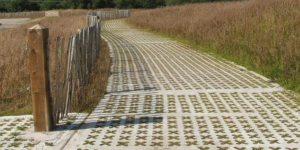
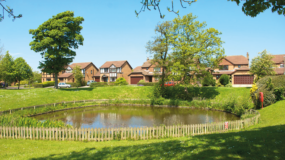
Paving surrounding SUDS pond cc-by-sa/2.0 – © Lairich Rig – geograph.org.uk/p/1470042
Permeable Interlocking Pavers
Concrete or stone blocks designed with gaps for water to infiltrate. They are strong enough for vehicular traffic and often installed with sand or gravel infill, combining durability with drainage benefits.
Porous Resin-Bonded Aggregates for Walkways
A thinner version of resin bound surfacing, perfect for paths, patios, or small outdoor areas. When laid on a permeable sub-base, they allow water to drain effectively.
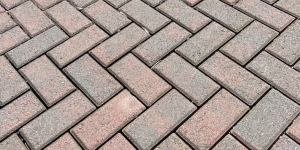
Permeable Brick Paving
Traditional brick laid with gaps filled with permeable sand or gravel. This maintains a classic look while ensuring water infiltrates the ground, reducing runoff.
Reinforced Gravel Systems
Gravel is laid over a stabilising grid to prevent movement while remaining fully permeable. This option works well for driveways, garden paths, or parking areas and is cost-effective and environmentally friendly.
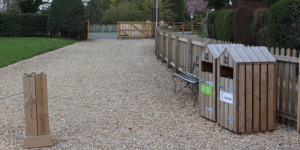
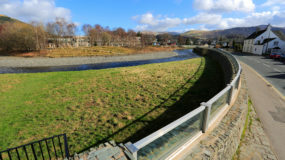
Image: M J Roscoe from Geograph, and licensed for reuse under the Creative Commons Licence.
Permeable Block Paving
Permeable block paving, often made from concrete or clay, allows water to pass between the blocks and infiltrate through a permeable sub-base. These are ideal for driveways, paths and small patios, providing a traditional look while still offering sustainable drainage benefits.
Benefits of Permeable Paving
Even traditional surfacing materials like concrete or asphalt can be adapted to help manage surface water effectively. By designing your driveway or path with water management in mind, you can reduce runoff and prevent contributing to local flooding.
For example, the surface can be laid with a slight fall or gradient to direct water into a collection or drainage system, such as:
Roof water can also be diverted into these systems by connecting drainpipes, further reducing the amount of water entering the public sewer network.
Many water companies charge for handling rainwater that enters the sewer system, either as part of a standing charge, based on your property’s rateable value or linked to your property type. By preventing roof and surface water from reaching the sewers, you may qualify for a surface water drainage rebate from your water company, which can reduce future charges and in some cases refund previous payments.
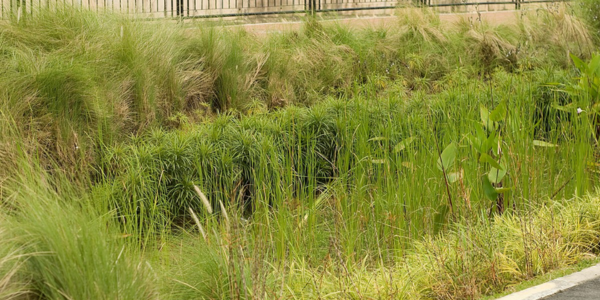
Rain Garden. Image: Rogersoh/ CC BY-SA 3.0
For more information with good links and tips on this subject, visit ‘Guidance on the permeable surfacing of front gardens’ here, or explore the Unpave the Way Project.