This blog has been written by The Flood Hub People.
Have you considered how, or where, you’ll dispose of your real Christmas tree after the festive period? Beyond recycling or composting, did you know that your old Christmas tree can play an important role in coastal protection? Used correctly, it can help regenerate sand dunes, which in turn protect against coastal flooding and erosion.
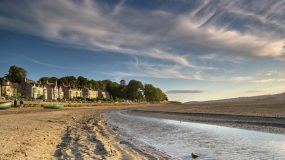
Sand dunes are natural barriers that shield coastal towns and villages from high tides, storm surges, flooding and erosion. They form above the high tide line when dune vegetation traps wind-blown sand. Over time, this accumulation increases the height and width of the dunes. However, dunes are dynamic and constantly changing due to wind, rising sea levels and human activity, such as trampling by visitors, which can damage fragile dune vegetation.
Dune “thatching” is a method used to preserve these natural barriers. It involves placing bundles of straw, branches, plants or old Christmas trees along the front of dunes. These materials trap sand, protect new and existing vegetation and encourage sand accretion. Christmas trees planted tightly in rows act as a fence at the base of the dune, particularly where marram grass has been lost. Without this natural vegetation, dunes can flatten, leaving coastal areas more vulnerable to flooding and erosion.
Dunes also support a diverse range of protected plants and animals, with some areas designated as Sites of Special Scientific Interest (SSSI). Over time, buried Christmas trees become integrated into the dune structure, helping to stabilise and build up these vital natural sea defences.
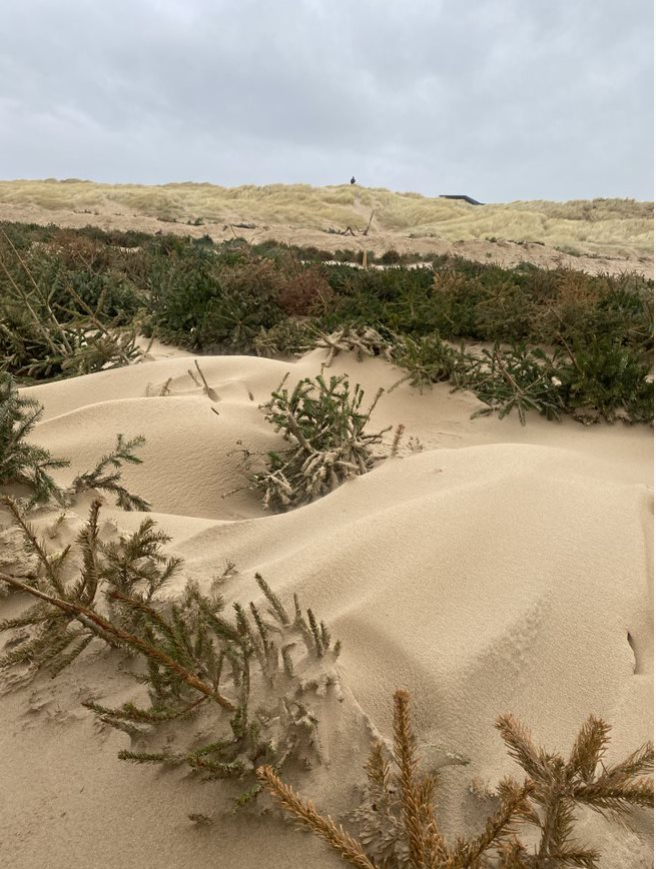
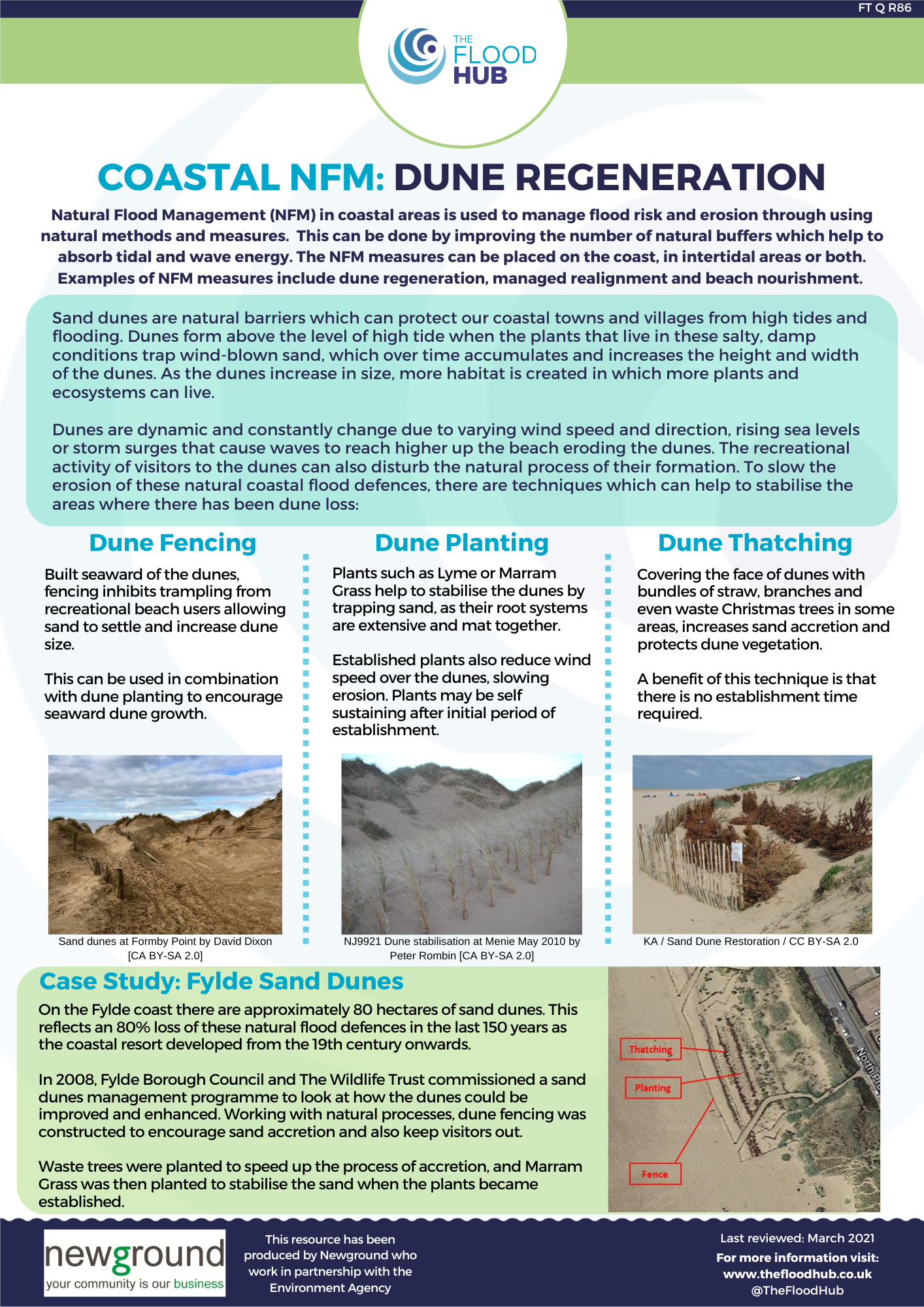
Dune thatching is one method which can help preserve them, which involves covering the front of the dunes with bundles of straw, branches, plants or old Christmas trees. This technique increases sand accretion as the branches of buried plants and Christmas trees trap sediment and protect the vegetation of any new and existing dunes.
Planting Christmas trees tightly together in rows helps create a fence at the base of a dune. They are put in place where naturally occurring marram grass has been lost from trampling. Without marram grass, dunes can become flattened, as the wind blows in from the sea and blows the sand on the dune away. This can be a potentially big problem as dunes act as a natural sea defence in coastal areas and protect against flooding and erosion.
Dunes also provide a unique habitat for many protected plant and animal species, and some have a Site of Special Scientific Interest (SSSI) designation. Overtime, Christmas trees help to stabilise and build up dunes as they get buried by the windblown sand.
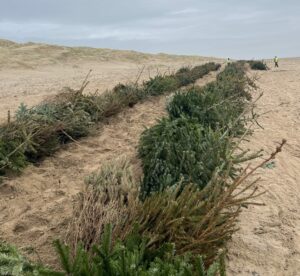
Organisations such as the Wildlife Trust and National Trust host annual Christmas tree planting events across the UK. By donating your old real Christmas tree, you can actively contribute to coastal protection and habitat preservation.
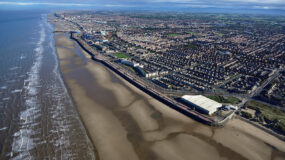
One example is the Fylde Sand Dunes project, a partnership between the Wildlife Trust for Lancashire, Manchester and North Merseyside, Fylde Council, Blackpool Council and funded by the Environment Agency. The project encourages visitors to the dunes while educating the public on their importance for flood defence and wildlife conservation. Over the past 150 years, more than 80% of Lancashire’s sand dunes have been lost. The project has helped rebuild these natural barriers, burying 11,000 Christmas trees along the coast in Lytham, St Anne’s, and Blackpool.
If you would like to donate your Christmas Tree to the Fylde Sand Dunes project this year, or volunteer to help plant trees in early 2026, visit the project page here.
If you would like to donate your Christmas tree, follow the links below to find more information:
To read about what The Flood Hub Team got up too when we volunteered with the project, read our blog here.
For more information on dune regeneration, please download our resource here.
Sources used: National Trust, The Wildlife Trust for Lancashire, Manchester and North Merseyside.