This summer we have experienced unprecedented wildfires across the globe, and the consequences have been devastating. These fires are exacerbated due to climatic changes that make weather extremes – specifically longer, hotter and drier periods – more likely, which creates the conditions for fire to spread.
It’s undoubtedly a huge challenge. However, in much of the discourse about these fires, the default terminology has been unhelpful in shaping how we understand their causes and solutions. The term ‘wildfire’ itself can sometimes be misleading. Many of the landscapes experiencing these fires are far from being truly wild, having been heavily shaped and managed by people over decades or even centuries.
Fires are a natural part of some wilderness ecosystems, and that fact is sometimes cited as evidence that rewilding increases fire risk. However, this overlooks an important distinction. Healthy wilderness areas are often better able to withstand and recover from fire because their natural processes and diverse ecosystems retain more water for longer.
This is one reason why rewilding and nature restoration approaches are increasingly being recognised as important tools for building landscape resilience. Rich, dense green and blue wetland habitats are great examples of this: they’re wetter, they act as refuges for plants and animals and can support more rapid post-fire recovery.
Too often, more vegetation is viewed simply as more ‘fuel’ and therefore increased fire risk, rather than as part of an ecosystem that can help retain water and build resilience to drought and fire. In reality, vast swathes of land that are currently encountering wildfires are by no means wild – by ‘wild’, we mean landscapes where natural ecological processes remain largely intact and are able to function effectively. Many have instead been significantly artificially modified to serve specific societal uses.
Examples include draining wetlands, disconnecting floodplains, straightening streams and rivers, creating artificial drainage systems, often for agricultural production or other commercial land uses. What these have in common, importantly, is the removal of well-established, complex, wetter, resilient ecosystems that once dominated these landscapes.
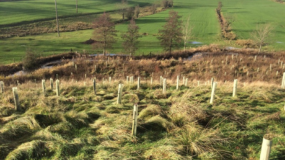
In Britain, many large areas of land have been simplified through single-species planting and other intensive land management practices to support commercial activities. This includes industrial scale timber plantations, heavily grazed rough pasture areas and upland areas where vegetation is regularly burned as part of estate practices. Compared with more diverse, dense and complex wilderness areas, these artificial landscapes delay and hold less water, making them more susceptible to drought and fire.
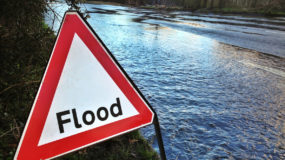
In late 2025 and early 2026, Britain experienced a winter that was significantly wetter than average, including records for the longest consecutive days of rain in many places. At the end of this period, the landscape was saturated and many reservoirs were at healthy levels across the country.
Yet just six months later, the Environment Agency declared drought across more than half of England, including London. Even now, despite some recent rainfall, drought conditions persist. This raises the question: where did all the rain that fell last winter go? The reality is that too much of it moved rapidly through our rivers, drainage networks and infrastructure, rather than being stored for the months ahead. While reservoir capacity forms an important part of the challenge, our landscapes are also failing to retain enough water. Widespread action is needed to enhance resilience and help landscapes and water systems store more rain where it falls, before releasing it gradually over time.
While plans are already progressing to increase long-term water storage capacity through new reservoirs we also need practical and cost-effective solutions that can be implemented now, and a new mindset that places nature at the core of our resilience planning.
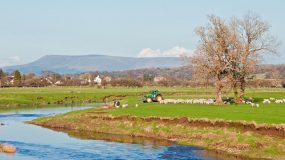
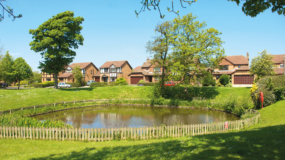
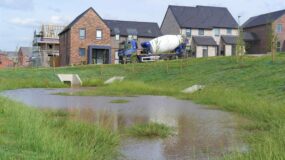
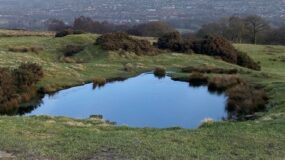
Our natural landscapes should be increasingly considered as an initial reservoir, slowing, storing and releasing water naturally before it reaches engineered infrastructure including constructed reservoirs. The more water we delay and store, the better – in river basins through restored rivers and wetlands, bog rewetting and restoration, networks of ponds across the landscape, blocking artificial drains, natural flood management, lake creation and importantly sustainable wet habitat restoration.
In today’s volatile and unpredictable climate there is rarely a good reason not to retain more fresh water where it lands. In fact, to deliver the resilience that society now requires and given the scale of human influence on the climate, our goal should be to increase the amount of water stored in the landscape beyond what would have been there in its natural state. A healthy landscape that can hold more water is not only less likely to burn, but also delivers numerous social benefits, such as reduced flood risk downstream, enhanced biodiversity, enhanced water quality and opportunities for recreation.
The good news is that many of the solutions to this water storage problem already exist. The challenge now is delivering them at the scale and pace required. Nature-based solutions (NBS) offer a myriad of flexible options that can be deployed quickly and cost effectively. Another benefit is that NBS can be delivered by society as a whole, rather than being restricted to certain responsible bodies. At a local level, individuals can support habitat restoration and water retention by actions as simple as creating a pond or rewilding an area of their garden. Landowners and farmers can undertake activities to hold more water locally, such as restoring wetlands, rewetting peatlands, creating ponds or reconnecting rivers with their floodplains and reducing unnecessary drainage.
Communities working with organisations such as rivers trusts as volunteers can be part of the delivery of more ambitious rewetting projects in the landscape. Empowered communities can be a powerful force in addressing our current and emerging resilience challenges, delivering change that is both sustainable long-term and effective.
At an institutional level, there is a network of scientists and environmental engineers who understand how to design and deliver systemic resilience long term by restoring natural processes and increasing the capacity of the landscape to store water. What’s needed now is coordinated action from government, regulators, water companies, environmental organisations, landowners and local communities to embed, deliver and adapt these approaches as part of long-term resilience planning and investment decisions.
Building more resilient landscapes will require action at every level, from national investment in water infrastructure to local habitat restoration. The expertise, tools and evidence already exist. The challenge now is scaling delivery and aligning policy, funding and land management around a shared objective: keeping more water in our landscapes. If we do that successfully, we will not only reduce the impacts of drought and wildfire, but also create healthier ecosystems, stronger communities and a more resilient future.
And in doing so, we may start to rethink the common misconception that wilder landscapes increase fire risk, when in many cases they can be part of the solution.
For more information and for a link to the original article, please click here.