This blog has been written by The Flood Hub People.
Flooding can be confusing and stressful, especially when it’s unclear who is responsible for managing different types of flood risk. This blog explains which organisations are responsible for rivers, drains, roads and watercourses, and who to contact when flooding happens, helping communities respond more effectively and with confidence.
Being flooded can be an upsetting, stressful and disruptive experience. Understanding who is responsible for managing flood risk and knowing who to report flooding incidents to can make the recovery process quicker and smoother.
While it’s natural to look for someone to ‘blame,’ public and government bodies responsible for flood management cannot completely eliminate flood risk and cannot be held accountable for natural flooding events. However, private landowners can be held liable if negligence of their riparian landowner responsibilities causes flooding to another property.
The Department for Environment, Food and Rural Affairs (DEFRA) leads flood and coastal erosion risk management policy in England. Delivery of these policies is handled by different Risk Management Authorities (RMAs), depending on the type of flood risk.
Private drainage up to the boundary of the property is the responsibility of the property owner. Whether this is a house or a business, the person who owns the property is responsible for any flooding that occurs as a result of one of their blocked or burst drainage pipes – this includes pipes, gutters and drains.
If you are unsure whether the blockage causing the flooding is from a private or public sewer, contact your water company. United Utilities have a helpful diagram showing the responsibilities for sewer pipes here: https://www.unitedutilities.com/help-and-support/wastewater-services/sewers-and-drains-explained/
If rainwater enters a property through the roof as a result of storm damage, the subsequent flooding or damage is the responsibility of the property owner.
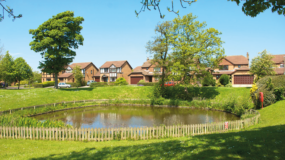
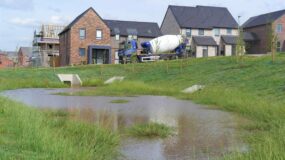
If a property contains Sustainable Drainage Systems (SuDS) to manage rainwater, the property owner or landowner is responsible for maintaining the SuDS components over the lifetime of the development, even if it serves other properties. The exception to this is if the SuDS component has been adopted by an organisation such as a local authority or water company – this organisation then has the responsibility for managing and maintaining it. For more info, visit the Susdrain website here: https://www.susdrain.org/delivering-suds/using-suds/adoption-and-maintenance-of-suds/maintenance/index.html
If you are moving into a property that has SuDS, you should check who is responsible for maintaining them, as this responsibility may lie with you.
To find out more about what SuDS are, download our SuDS booklet here.
Watercourse owners, or ‘riparian’ owners, have a responsibility to maintain ordinary watercourses that run adjacent to, through or under their property. This applies to all types of watercourses including ditches, dykes, streams and culverts, apart from main rivers and the sea.
Riparian owners are responsible for reporting incidents such as flooding, and for letting water flow through the watercourse naturally by removing blockages that may cause flooding. However, the riparian owners are not responsible for proactively reducing the risk of flooding from the watercourse. See more information on owning a watercourse here: Managing a watercourse (thefloodhub.co.uk)
An ordinary watercourse refers to any watercourse which is not a main river: including ditches, dykes, streams and culverts. Managing flood risk from these watercourses is the responsibility of the Lead Local Flood Authority (LLFA), unless the watercourse in question runs adjacent to, through or beneath private land or properties. In which case, the responsibility lies with the landowner or property owner (the watercourse owner).
The LLFA for your area will either be the Unitary Authority or the County Council. The LLFA is responsible for managing the risk of flooding from surface water and groundwater, as well as ordinary watercourses. They are also responsible for investigating all flooding incidents where deemed necessary.
Flooding from ordinary watercourses should be reported to the Lead Local Flood Authority. Find your local council here: https://www.gov.uk/find-local-council . If the area you live in has multiple authorities and you are in doubt as to which one is the LLFA, it is usually the authority responsible for delivering education, transport and social care services.
Find more information on how your council works here: https://www.gov.uk/understand-how-your-council-works.
For advice on owning a watercourse, you should contact your risk management authority which will be your LLFA or the Internal Drainage Board (IDB). IDBs are responsible for water level management in low lying areas and work in partnership with other authorities to manage and reduce the risk of flooding within their districts but are not responsible for main rivers.
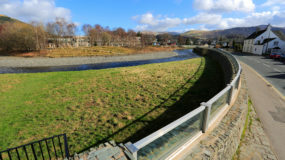
Managing flood risk from all main rivers and the sea is the responsibility of the Environment Agency.
If you come across any flooding from a river or the sea, or any blockages that may cause flooding from main rivers, you should report it to the Environment Agency’s incident hotline on 0800 80 70 60, which is a 24-hour service.
If you’re about to be flooded, you can call the Environment Agency’s Floodline on 0345 988 1188 for advice.
Water and sewage companies are responsible for public sewers and utility pipes. Within terraced or semi-detached properties, shared sewer pipes where the drains from several properties meet before joining the public sewer are also the responsibility of the water company. Any other drains from a property to the boundary of the property are the responsibility of the property owner.
To report overflowing sewers affecting your home or garden, contact your water company.
Roads, footpaths, drains and gullies that drain surface water from these highway roads are the responsibility of the Highways Authority, which will usually be either the Unitary Authority or the County Council.
To report flooding of public drains and roads, contact your Unitary Authority or County Council. Find your local council here: https://www.gov.uk/find-local-council
Drainage on major (trunk) roads and motorways is the responsibility of Highways England.