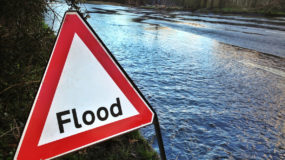
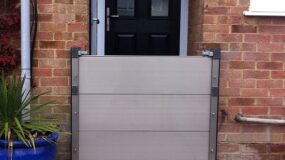
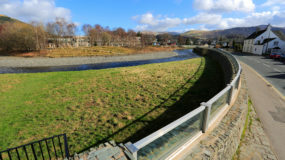
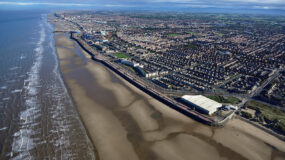
The Environment Agency is delivering a Flood Risk Management Scheme to better protect homes, schools, and businesses along sections of the River Ribble and River Darwen. The Scheme will also deliver improvements to the local environment and community amenities.
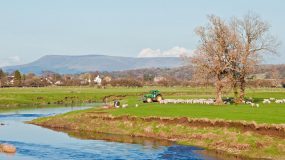
The Preston and South Ribble Flood Risk Management Scheme starts at Broadgate in Preston, follows the River Ribble upstream through Walton-le-Dale, and then continues along the River Darwen to the Blue Bridge, near Higher Walton Road.
Delivered by the Environment Agency and its partners, the Scheme is designed to reduce flood risk and provide protection for around 5,000 homes and businesses.
Alongside strengthening flood resilience, the Scheme also includes measures to address climate change, enhance local environments, and support growth and regeneration in the surrounding communities.
The Scheme is divided into two phases. Phase 1 is close to completion, with most of the new flood defences along Broadgate and Riverside in Preston, as well as those in Lower Penwortham, now constructed.
Construction of Phase 2 will begin once planning permission is granted. This stage includes raising and upgrading flood defences along the River Ribble in Walton-le-Dale, as well as improving short sections on Chorley Road and off Higher Walton Road along the River Darwen. Maintenance works on existing defences in Frenchwood (Preston) and Walton Green have already been completed.
For a complete overview of the Flood Risk Management Scheme, click the link below to download a copy of the Design and Benefits Guide. It explains how the Scheme will be delivered, what will be constructed, the benefits of the Scheme, and what the community can expect during construction.
The Phase 1 working hours, approved through planning permission, are 8am to 6pm Monday to Friday and 9am – 2pm on Saturdays. The Environment Agency and its construction partner VolkerStevin do not expect to work on weekends or public holidays. Note: Utility and service providers may agree different working times with local councils.
Unfortunately, some noise and dust will be created during construction. VolkerStevin will monitor and manage noise, vibration, and dust levels, and will endeavour to minimise the impact on homes, businesses, public areas, and the surrounding natural environment where possible.
To manage any construction-related road debris, cleaning of the carriageway will be undertaken by a road sweeper or similar, as appropriate.
The work areas will be compact to minimise disruption. Designated routes will be used to bring materials and machinery to site compounds, from where they will be distributed to the various work zones.
Diversions and closures will be required in some areas and Traffic Management Plans will be agreed with Lancashire County Council’s Highways Department, who will ensure any temporary road or lane closures are managed appropriately to minimise traffic disruption.
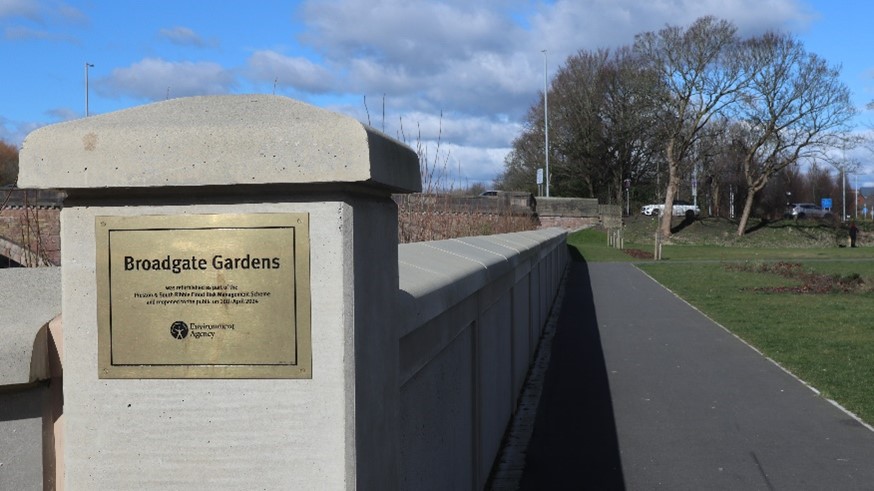
Broadgate Gardens has been restored with a mix of fruit trees, ornamental shrubs, and amenity grassland. Additional seating areas have been provided and the Environment Agency has restored the riverside viewing platform.
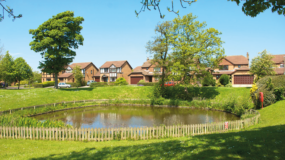
In Lower Penwortham, the Environment Agency is working with South Ribble Borough Council to create an insect and wildlife-friendly wetland habitat, the design includes:
An area of amenity grassland and the existing children’s playground has been retained for recreation.
The Victoria Road viewing platform will be restored following the works with improved planting, surfacing and seating facilities.
The design team has worked carefully to consider everyone’s needs.
The Environment Agency has worked with local schools to deliver educational sessions, this includes teaching students about the dangers of flooding, and the impact of climate change.
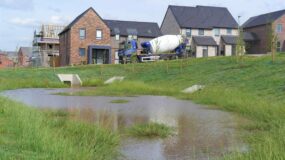
The Scheme has also delivered improved surface water drainage in playgrounds for three local primary schools. Elements of Sustainable Drainage Systems (SuDS) have been installed, which include permeable surfacing, rainwater planters, water butts, and trees. SuDS is a nature-based method that helps reduce surface water and improve water quality, by:
Projects have been completed at:
Surveys are conducted before any tree removal takes place, this is carried out in consultation with relevant partners. Trees are incorporated into the Scheme’s design to support natural habitats and for other purposes, where possible.
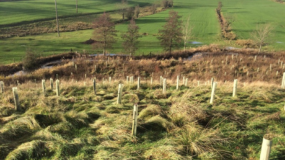
The Scheme is committed to planting at least 12 trees for every tree removed due to construction, and it’s worked closely with partners to identify planting locations. This includes planting over 8,500 trees and 2,550 hedgerow species along the river at Fishwick Bottoms in Preston. The Scheme has also supported South Ribble Borough Council’s “Plant 110,000 Trees” programme, with extensive planting at Golden Way in Lower Penwortham.
Proposals for replacement and compensatory planting, as well as landscaping and biodiversity requirements, are detailed within the environmental masterplans as part of the planning application submissions.
To enable construction works along Victoria Road, some of the trees on the river side of the existing wall will need to be removed. Removing trees is not something the Environment Agency undertakes lightly. Extensive investigations, including tree root radar surveys and engineering assessments, were carried out to try and identify alternative designs that could preserve them. Unfortunately, due to the density and spread of the root systems, and the proximity of the trees to the required working area, it is not feasible to retain them and construct the flood defences.
The proposed design includes the removal of 18 lime trees, but three others at the viewing platform will not interfere with works and won’t be removed. The Environment Agency is also exploring further ways to mitigate the tree loss. 180 cuttings have been taken from the trees, which are being propagated and will be planted elsewhere in the community. 14,000 trees have been planted as part of the Scheme on the opposite bank in Fishwick Bottoms
More details on the lime trees can be found here.
A range of ecological surveys have been undertaken to inform and support the Scheme. The Scheme encompasses habitats typical of the urban setting along the River Ribble and River Darwen, i.e. grasslands, tree lines, roads, bridges, and pedestrianised areas. The surveys pay particular attention to otters living along the River Ribble and to local bat activity.
Working in the river is avoided wherever possible but when it is necessary, it is restricted to between mid-June and January. This avoids impacting coarse fish, smelt (small fish), and eels present in the River Ribble.
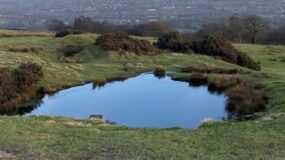
The Scheme has invested in habitat creation, this has mostly taken place at Fishwick Bottoms in Preston with the planting of native trees and hedgerows, and at Ribble Sidings in Lower Penwortham with the construction of an insect-friendly wetland.
Some of the new flood defences will be constructed close to historic structures—such as Penwortham Old Bridge—or close to conservation areas. Extra care will be taken when working in these sensitive locations.
Any small heritage features, such as mile markers, will be carefully removed during construction and reinstated in their original positions once the flood defences are complete.

There is a long history of flooding in Preston and South Ribble, with records dating back to the 1700s. Several significant flood events have occurred since 1936, including Storm Eva in 2015.
The existing flood defences were constructed between the 1920s and the early 2000s. Many of these structures are now approaching the end of their design life and require repair, replacement, or extension. In other areas, entirely new defences will be built. The Scheme will also take into consideration climate change and environmental enhancements.
The proposed Scheme will better protect around 5,000 residential properties and businesses from direct flooding from the River Ribble and the River Darwen. There is also a focus on growth and regeneration in the areas where the Scheme is being constructed.
To request a copy of the FAQ leaflet, please email [email protected].
Information on the Preston and South Ribble (PSR) pages has been provided by the Environment Agency and was correct at the time of upload. The Flood Hub is not responsible for any information held on the PSR pages. If you have any queries, please see the Contact section of this page.